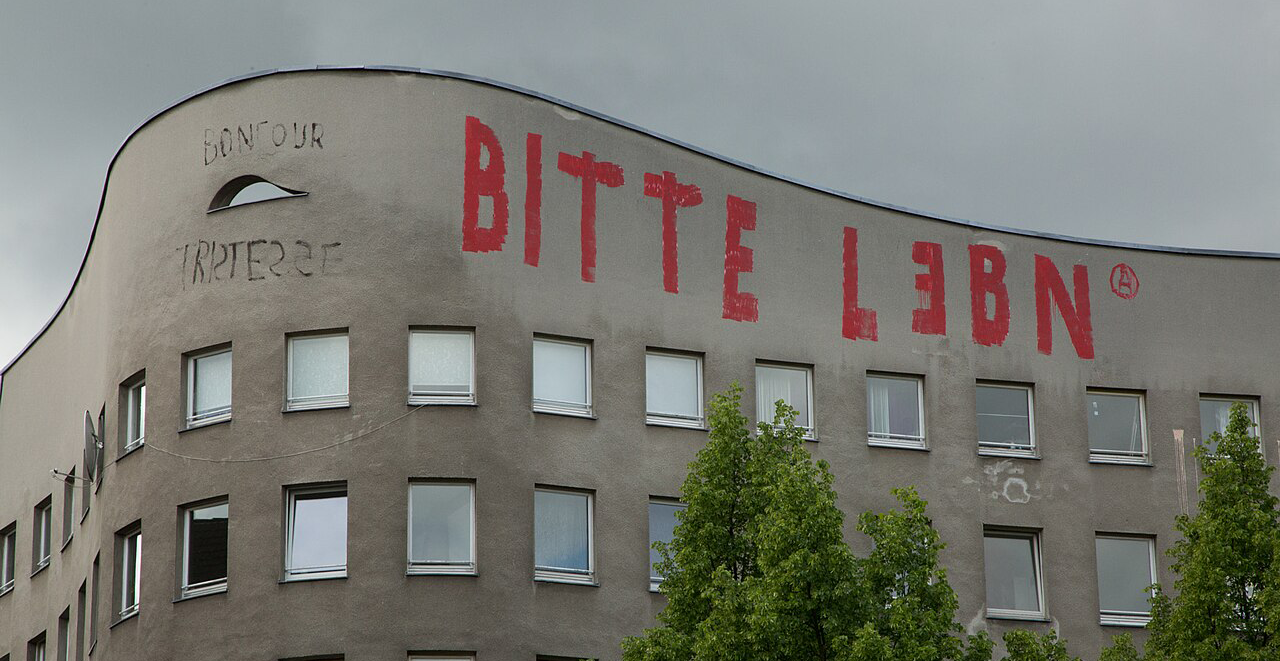
Writing, place-making and architecture

Thematic call for Epigraphy, Graffiti, Iconography (EGI), an Open-Access, Peer-Reviewed Journal.
Co-editor: Philippa M. Steele, PhD, Senior Research Associate, Faculty of Classics, University of Cambridge, Senior Research Fellow, Magdalene College, Cambridge, United Kingdom; https://orcid.org/0000-0003-3109-265X

Abstract (seminar) until the end of June 2026.
Full paper (publishing) until the end of September 2026.
Publication of the Issue: December 2026.

Online Seminar September / October (to be announced)

Submissions should be made through the EGI journal publishing platform.
Please indicate the thematic call you are submitting to in the “Comments for the Editor” field.


A place-making approach to writing understands its location as crucial to its interpretation (e.g. Scollon and Wong Scollon 2003, Jaworski and Thurlow 2010, Warnke 2013, Andron 2024), and casts the landscape and its features as “subject to constant remaking” (Kress and van Leuwen 1996, 35) through its practice. Writing augments and changes places, just as landscape situates existence and human activity (Tilley 1994). Pieces of writing (epigraphy, graffiti, etc) do not simply signal, they are relational, “ordered components of socially constructed spaces” (Wilson and David 2002, 7) and ways of turning spaces into places (e.g. Bradley 2000, 97). The act of inscribing on a permanent surface (or one at least unlikely to move, whether a natural feature, a wall or a heavy stone object), and the product of that act, can be seen as quite literally taking place, becoming part of the “visual sphere and its immediate discourse” (Chmielewska 2007, 161). Thus the visible landscape both contributes to and is changed by the act of writing.

The present call focuses specifically on architectural loci of writing. Buildings are not typically constructed with the intention that hosting writing will be their primary purpose - although in some cases there may be conventions about where, when, why and how they may be written on. Choosing to write on an architectural surface can never be neutral because its locus is loaded with social significance contextualised by the purpose and usage of the built environment.

We invite contributions that consider writing in architectural contexts from the ancient world to the modern day. What drives the choice of an architectural support for writing over other possibilities? What factors motivate placement or stylistic choices? How do issues of scale affect the production and consumption of the writing? In what contexts could the writing be said to become monumental? How is the making and reception of meaning entangled with the movement and activities of people through the built environment?

Writing is here construed broadly to include traditions incorporating ideographic, phonographic, pictographic or other elements. We particularly welcome contributions that engage with theoretical issues or historical developments or that include diverse global writing traditions past and present.


References
Andron, S. 2024. Urban Surfaces, Graffiti, and the Right to the City. Routledge, London.
Bradley, R. 2000. An Archaeology of Natural Places, London: Routledge, 2000.
Chmielewska, E. 2007. Framing [con] text: Graffiti and place, Space and culture 10(2), 145-169.
Jaworski, A. and Thurlow, C. (eds.) 2010. Semiotic Landscapes: Language, Image, Space. Continuum, London.
Scollon, R. and Wong Scollon, S. 2003. Discourses in Place: Language in the Material World. Routledge, London.
Tilley, C. 1994. A Phenomenology of Landscape: places, paths and monuments, Berg: Oxford.
Warnke, I.H. 2013. Making place through urban epigraphy–Berlin Prenzlauer Berg and the grammar of linguistic landscapes. Zeitschrift für Diskursforschung 2, 159–181.
Wilson, M. and David, B. 2002. Introduction, in David, B. and Wilson, M. (eds.) Inscribed Landscapes: Marking and Making Place, Honolulu: University of Hawai’i Press, 1-9.


Image credits: Bonjour Tristesse - Bitte Lebn: Jens Borrmann, CC BY 3.0 via Wikimedia Commons 2026