AFTERSHOCK. Catastrophe, Creative Practice and the Unstable City

From Terrae Motus to the Global Urban Creativity

Thematic call for Graffiti and Street Art (GSA), an Open-Access, Peer-Reviewed Journal.
Co-editor: Lorenza Carannante, PhD in History and Transmission of Cultural Heritage at University of Campania “Luigi Vanvitelli” (Naples)’s Department of Letters and Cultural Heritage (DiLBeC).

Calendar
Abstract until the end of December 2026
Full paper until the end of March 2027
Publication of the Issue: July 2027

Submissions should be made through the GSA journal publishing platform.
Please indicate the thematic call you are submitting to in the “Comments for the Editor” field.

The thematic call it's associated with Urban Creativity, conference and activities 2027, 14th edition, typically on early July, exact dates to be defined.

What happens to a city when the ground moves — not only physically, but in its memory, its images, its sense of the future? AFTERSHOCK looks at how creative practices responds when a city can no longer take its own stability for granted. Earthquakes are our starting point, but not our limit: the same questions apply to flooding, fire, war, displacement, or any rupture that turns the familiar into the uncertain.

Naples, 1980

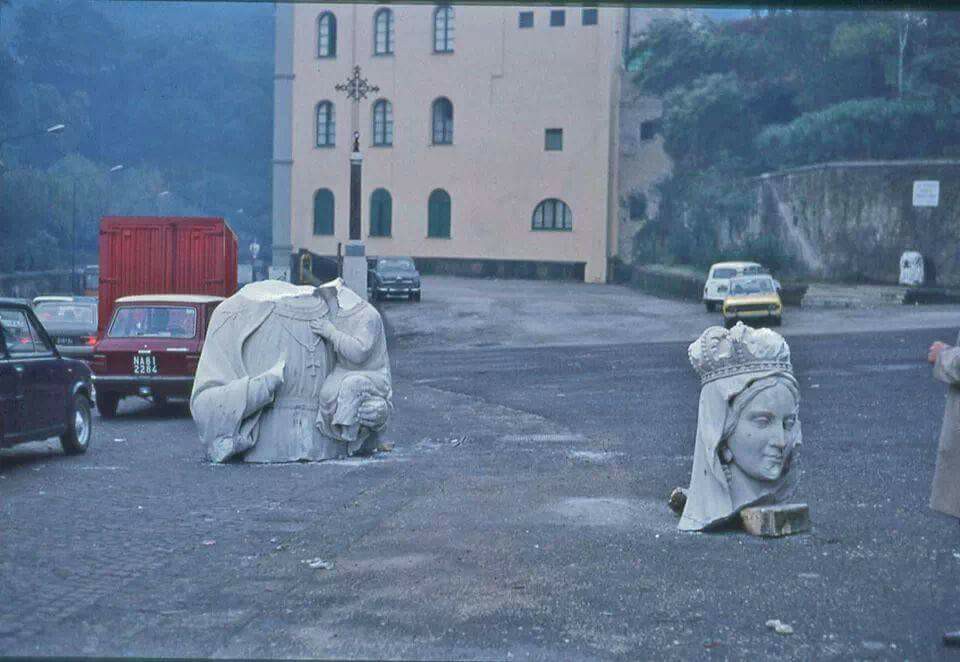
On November 23rd, 1980, an earthquake struck Campania and Basilicata. In Naples, gallerist Lucio Amelio (Naples, 1931–1994) responded by inviting artists from around the world to make work about the disaster. The result, Terrae Motus, brought together 72 works by 67 artists — Joseph Beuys, Andy Warhol, Jannis Kounellis, Mimmo Paladino, Anselm Kiefer, Cy Twombly among them — turning catastrophe into a shared act of cultural production.

At the centre of the collection is Andy Warhol’s Fate Presto (1981), taken from a newspaper headline urging immediate action. Fate Presto — “act now” — captures the urgency of the aftermath. Almost fifty years later, the Campi Flegrei ask a different question. On July 31st, 2026, a magnitude 4.7 earthquake struck between Pozzuoli and Quarto, part of an ongoing seismic sequence closely monitored by INGV. It was a reminder, not an anomaly: this is a territory that has been rising, trembling and unsettling its residents for years, with no clear date for what comes next. Naples today lives not only with the memory of disaster, but with its permanent possibility. Fate Presto becomes What now? — and, looking ahead, What next? This is the ground — literally — on which AFTERSHOCK stands: not a historical case study, but a city currently, actively, living the condition it asks us to think about.

Lisbon, 1755
Lisbon knows this condition intimately. The earthquake of November 1st, 1755, was, by some accounts, history’s first global media event: news of it spread across Europe through the young network of newspapers and pamphlets, feeding a philosophical debate — such as Voltaire and Rousseau — about human agency and vulnerability that still echoes today. The disaster also produced the first large-scale attempt to study catastrophe empirically, and, in the Gaiola Pombalina, one of the first engineering responses designed specifically to absorb an earthquake’s force. The rebuilt city — its grid, its evacuation routes, its underground sewage — set out principles of resilient urban planning that still shape how cities are built.

Naples and Lisbon, then, are not simply two case studies, they are two moments, 225 years apart, when a city was forced to reinvent its relationship to risk — through art, through engineering, through the sheer necessity of rebuilding. AFTERSHOCK starts from this shared ground.

A Future of Predictable Disaster
Naples and Lisbon are no longer exceptions. Rising sea levels, extreme weather, wildfire and seismic risk are becoming a normal condition for cities everywhere — catastrophe is starting to look less like a rupture and more like a forecast. This changes what creative practice is asked to do. It is no longer only about mourning what has been lost, but about living, working and imagining a future inside a state of permanent alert. What does it mean to make work — or to make a city — when disaster is not a possibility but a probability?

Beyond Art
We use art as shorthand, but AFTERSHOCK is not only interested in art in a narrow sense, and we would rather sidestep the old argument about what does or doesn’t count as art. We are interested in creative practice broadly: street art and graffiti, public art, architecture and design, activism, DIY and self-organised initiatives, citizen science, oral history, digital and community archives — any practice that helps a city process, question or reimagine instability. What matters is not the label, but the capacity to respond.

Five Open Fields
Rather than fixed categories, AFTERSHOCK proposes five open fields of inquiry. Authors are invited to address one or more, from any relevant practice or discipline.

I — AFTERSHOCK: Trauma, Memory, Testimony What remains once the event is over? Oral history, memorials and anti-monuments, photography and documentary practices that keep catastrophe in public memory.

II — RUINS: Matter, Architecture, Heritage What does a city choose to preserve, and what does it let go? Ruins, adaptive reuse, contested heritage, the material afterlife of destroyed buildings.

III — DISPLACEMENT: Bodies, Communities, Territories What happens when the tie between people and place is broken? Migration, temporary housing, exile and return, the reshaping of neighbourhoods and identities.

IV — REBUILDING: Art, Architecture, Participation Can reconstruction imagine a different city, not just restore the old one? Public and participatory art, community-led design, temporary and DIY urbanism.

V — LIVING WITH RISK: Uncertainty, Science, Future How does a city plan for a future it cannot predict? Risk communication, art and scientific data, speculative design, sound and seismicity, preparedness culture.


From Representation to Participation

Terrae Motus followed a fairly traditional model: artists responding to a community’s disaster from the outside. Today that relationship is less one-directional, communities are not only subjects to be represented — they are increasingly authors, witnesses, archivists and co-researchers of their own catastrophe. This shift matters both ethically and practically: it changes who gets to produce a city’s knowledge of itself, and who gets to imagine its future. It also changes the image of disaster itself: a newspaper headline could once become a museum piece, as with Fate Presto. Today, the same event is documented simultaneously by journalists, residents with smartphones, satellites, scientific instruments and AI systems. The question is no longer just when documentation becomes art, but who gets to produce the images and knowledge through which a city understands its own risk.


Submissions should be made through the GSA journal publishing platform.
Please indicate the thematic call you are submitting to in the “Comments for the Editor” field.


Abstracts – The recommended length is approximately 300 words
Articles - The recommended length is approximately 5000 words
Essays - Includes Working Papers, Visual Essays: 2000 words


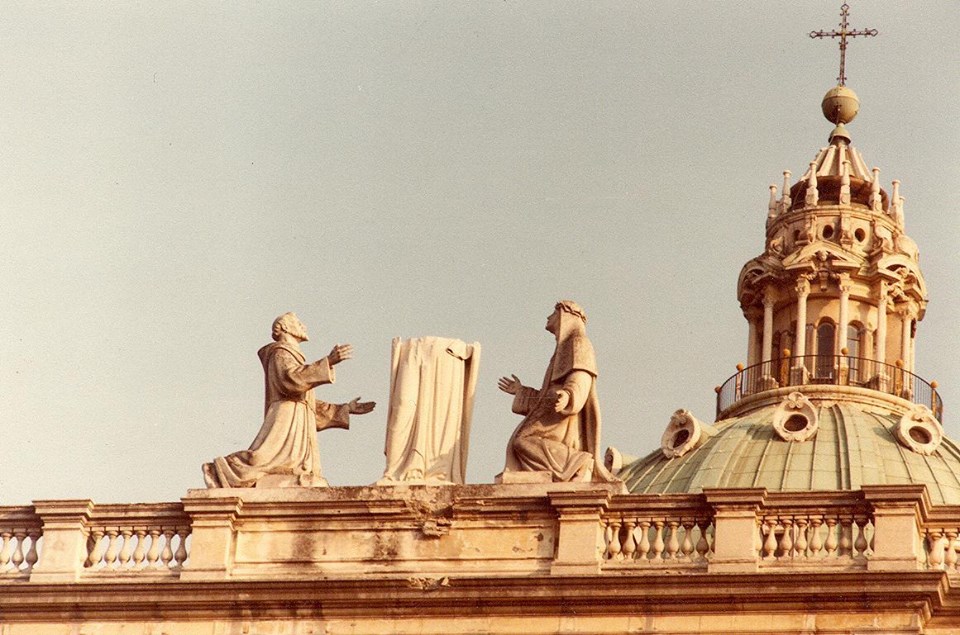
Credits: Naples – Basilica of the Incoronata Madre del Buon Consiglio. Statue of the Madonna that fell from the top of the façade following the earthquake of November 23, 1980. Photographer unknown. November 1980. Naples – Basilica of the Incoronata Madre del Buon Consiglio. Bust of the Madonna statue, which fell from the top of the façade following the earthquake of November 23, 1980. Photographer unknown. November 1981.