Archives

  • cover

    49 Cities: Columbia University, 2025
    Vol. 1 No. 1 (2025)

    The student research papers presented in this first issue of Visionary Architecture Studies are the result of a seminar taught at Columbia’s Graduate School of Architecture Planning and Preservation (GSAPP) in the spring of 2025. Entitled 49 Cities, and expanding on the publication by the same name, the seminar explored visionary architectural and urban projects as seen through an ecological lens. Bringing urban form together with urban performance, the seminar was intended to open up new possibilities for architecture and the built environment today, as well as critically and imaginatively expand the discipline’s ‘utopian canon’ to include new models from which to inspire the future.

  • Decolonizing Spatial Epistemologies
    Vol. 1 No. 2 (2025)

    Decolonizing Spatial Epistemologies gathers a fully Latin American dossier that advances a ch’ixi epistemology, coexistence without fusion, an interwoven yet non-assimilated fabric of worlds, in Silvia Rivera Cusicanqui’s sense (Rivera Cusicanqui, 2010). The issue takes aim at the long-standing denial of coevalness by which scholarly and heritage regimes have located Indigenous peoples in another time instead of the present (Fabian, 1983). Rather than accepting linear, progressive chronologies, the contributions treat time as layered, situated, and plural, attentive to ritual, narrative, and territorial anchoring (De la Cadena, 2010). This temporal reorientation proceeds together with a spatial one: design is approached from within territories and relations, not above them, resonating with the Critical Zone’s insistence on thick, earthbound interdependence and the refusal of abstract, placeless frames (Latour, 2018). In this sense, relational ontologies and ecologies of knowledge are not thematic additions but methodological grounds for architectural thinking that is pluriversal, more-than-human, and situated (Escobar, 2016; Haraway, 2016; Rahder, 2020; Coccia, 2019; Watson, 2019).

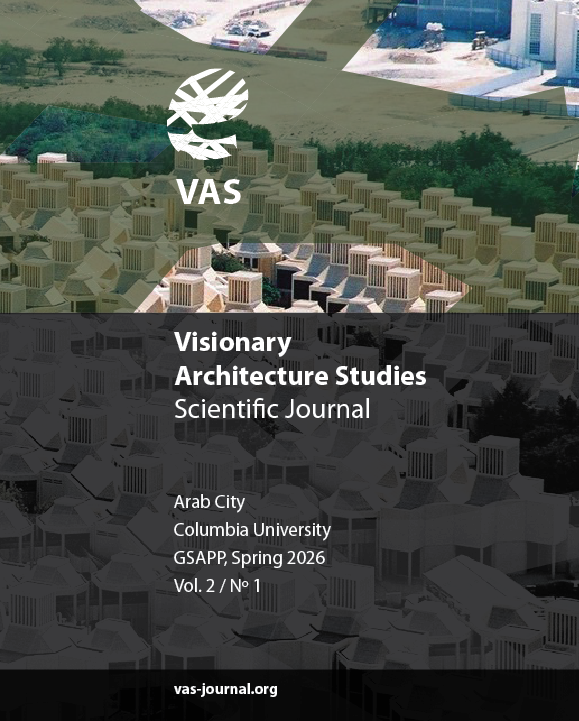
  • Arab City
    Vol. 2 No. 1 (2026)

    The Arab City does not exist. Yet, as an idea, it has occupied the site of endless projections—from exotic to political—which, re-examined, can enable us to better understand the region’s architectural and urban complexities, amongst other things. As a reality, the Arab City has manifested itself in varied ways across time and place. As such, it is a wonderful lens through which to understand a shared culture and people, its interconnected geography, and complex histories.

    In the past decades, The Arab City has fostered a wide array of radical experiments in architecture and urbanism. From leading the wave of ‘instant urbanism’ to building the first zero carbon city, the MENA region has hosted the FIFA World Cup, witnessed a resurgence of social housing and investment in outstanding institutional buildings, public spaces, and education campuses, led major reconstruction and preservation efforts as well as re-affirmed for the world the importance of public space through ongoing civil resistance and revolutions, however brutally repressed.