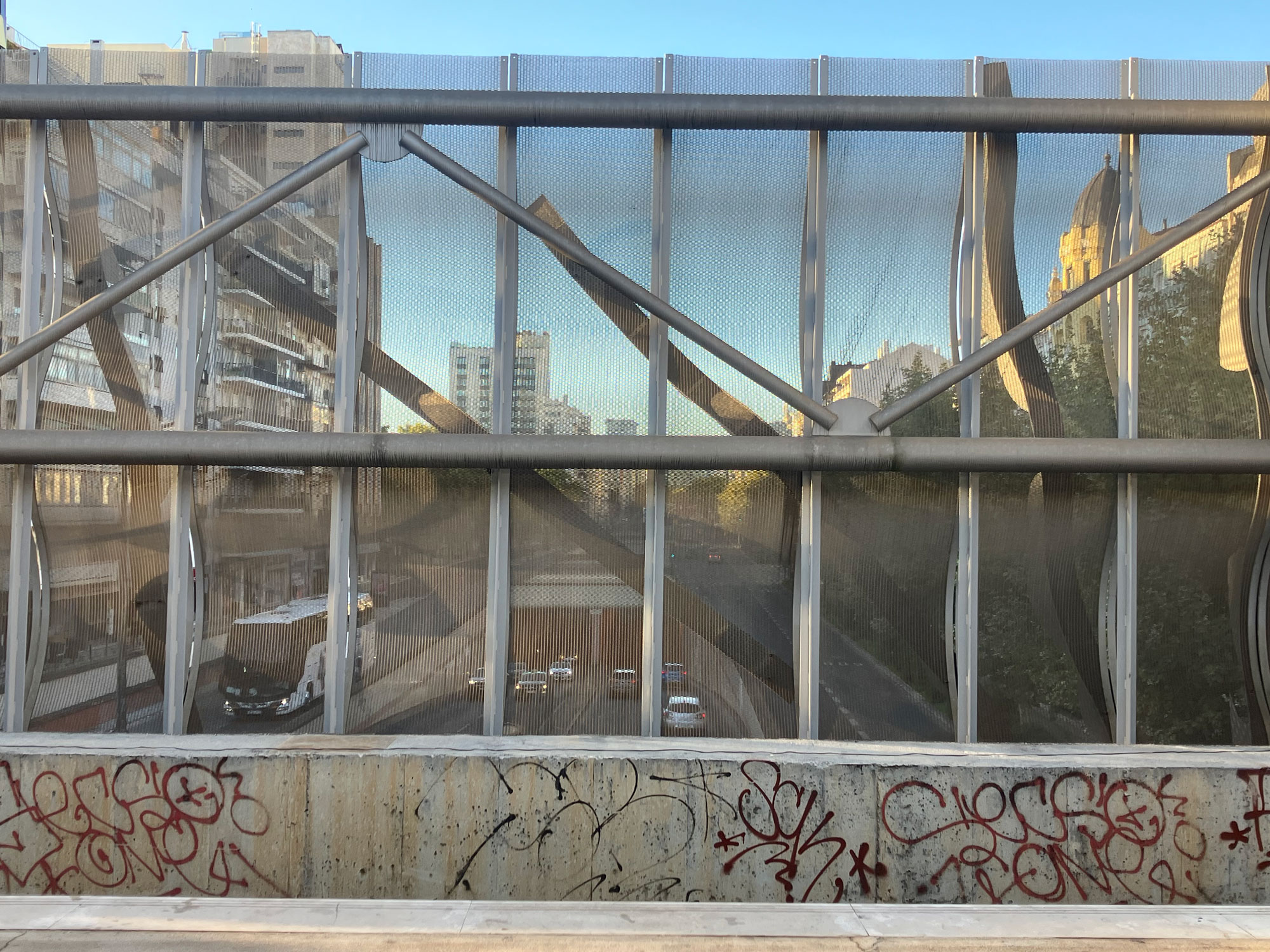


Writing and Pseudo-Scripts

Architectural contexts and script-image phenomena

Online Seminar dates: 18 and 19 September, 2026

Abstract (seminar) until the end of June 2026.
Full paper (publishing) until the end of September 2026.
Publication of the Issue: December 2026.

Submissions should be made through the EGI journal publishing platform.
Please indicate the thematic call you are submitting to in the “Comments for the Editor” field.
For any questions or submission problems please contact: info@wisethorough.com

The 1st Seminar on Writing and Pseudo-Scripts: Architectural contexts and script-image phenomena brings together two distinct research tracks from the Epigraphy, Graffiti, Iconography (EGI) journal to explore the frontiers of graphic expression in human culture. By bridging the study of "Pseudo-Scripts" and "Writing, Place-Making, and Architecture" this seminar investigates how graphic signs mutate between legible communication, pure visual phenomena, and structural spatial anchors.

At the heart of both research tracks is a shared fascination with writing and pseudo-scripts treated as autonomous visual entities, independent of their surfaces. This approach foregrounds the calligraphic gesture—the physical, kinetic act of making a mark that carries meaning or intent, whether calculated by a master painter or spontaneously scratched onto stone. Furthermore, it examines the development of pattern and ornament, where the rhythmic repetition of both real and pseudo-letterforms builds a unique decorative typography. Ultimately, this perspective highlights the deep, relational link between the tools utilized (such as chisels, brushes, or spray cans), the formal attributes of the resulting signs, and the specific sites they choose to occupy.

Beyond formal aesthetics, the seminar addresses the vital relationship that both scripts and pseudo-scripts maintain with Space (Place) and Time. We are interested in examining how writing turns abstract space into a culturally charged place. This occurs through the prestigious pseudo-alphabets applied to panels and textiles in ancient and premodern painting, the authoritative epigraphy of monumental architecture, or the subversive marks of historic and urban graffiti. To achieve this, the seminar deliberately intersects historical eras. By analyzing ancient paintings, historical epigraphy, and medieval pseudo-scripts alongside contemporary graffiti and urban lettering phenomena, we create a reverse-chronological dialogue. Modern spatial practices serve as a living laboratory, offering vital methodological keys to decode and understand past visual, social, and semiotic strategies.

By uniting researchers from epigraphy, art history, archaeology, linguistics, and contemporary visual studies, this seminar seeks to foster a unique convergence of perspectives, brought together under the academic umbrella of the Epigraphy, Graffiti, Iconography (EGI) journal.


Check here Writing and Pseudo-Scripts Seminar associated calls:

Pseudo-Scripts? Rethinking an Underexplored Script-Image Phenomenon

for Epigraphy, Graffiti, Iconography (EGI), an Open-Access, Peer-Reviewed Journal.
Co-editor: Anna Elisabeth Krebs-Bendszus, Institute for Art History, University of Bonn, Germany
More info

Writing, place-making and architecture
for Epigraphy, Graffiti, Iconography (EGI), an Open-Access, Peer-Reviewed Journal.
Co-editor: Philippa M. Steele, PhD, Research Professor, Faculty of Classics, University of Cambridge, Senior Research Fellow, Magdalene College, Cambridge, United Kingdom
More info